


Mission
The mission of the National Science Laboratory is to conduct advanced research in the field of physics, to develop comprehensive scientific capabilities, and to apply scientific and technological solutions that meet national needs, improve the safety, healthcare, and economic well-being of the citizens of the Republic of Armenia, and address contemporary global challenges. The implementation of AANL’s mission is based on fundamental and applied research in theoretical and experimental physics, particle and nuclear physics, materials science, and cosmic ray studies, as well as accelerator-based research, using and developing advanced computational approaches in artificial intelligence and machine learning. More
Vision
AANL’s vision is to become a regional center of excellence for advanced scientific research in high-energy physics and astrophysics, cosmic ray physics, nuclear physics and nuclear medicine, materials science, and related applied fields, as well as for the development of quantum and information technologies. MoreHistory
The Yerevan Physics Institute (YerPhI) was founded in 1943 by the renowned physicist brothers Abraham and Artem Alikhanyan. The origins of the Institute are rooted in the study of cosmic rays and the establishment of two cosmic ray research stations on Mount Aragats for this purpose: “Aragats” (3200 m) and “Nor Amberd” (2000 m). In 1962, the Institute came under the jurisdiction of the State Committee for Atomic Energy of the Soviet Union. MoreHistory
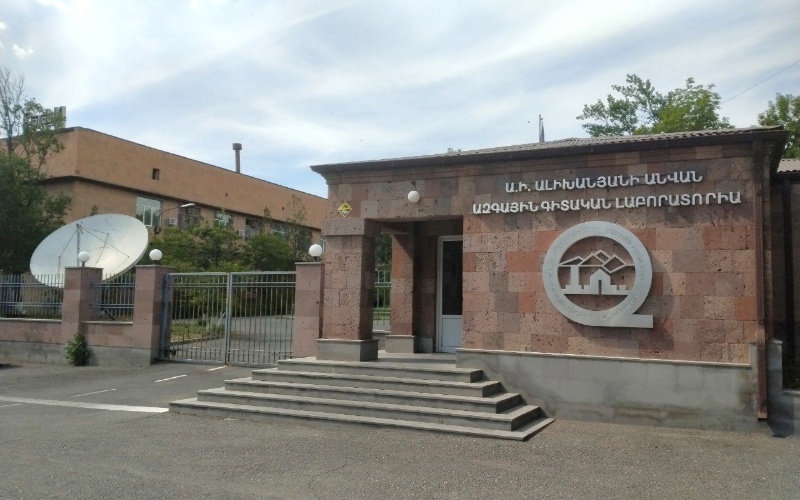
Reorganization as a Foundation
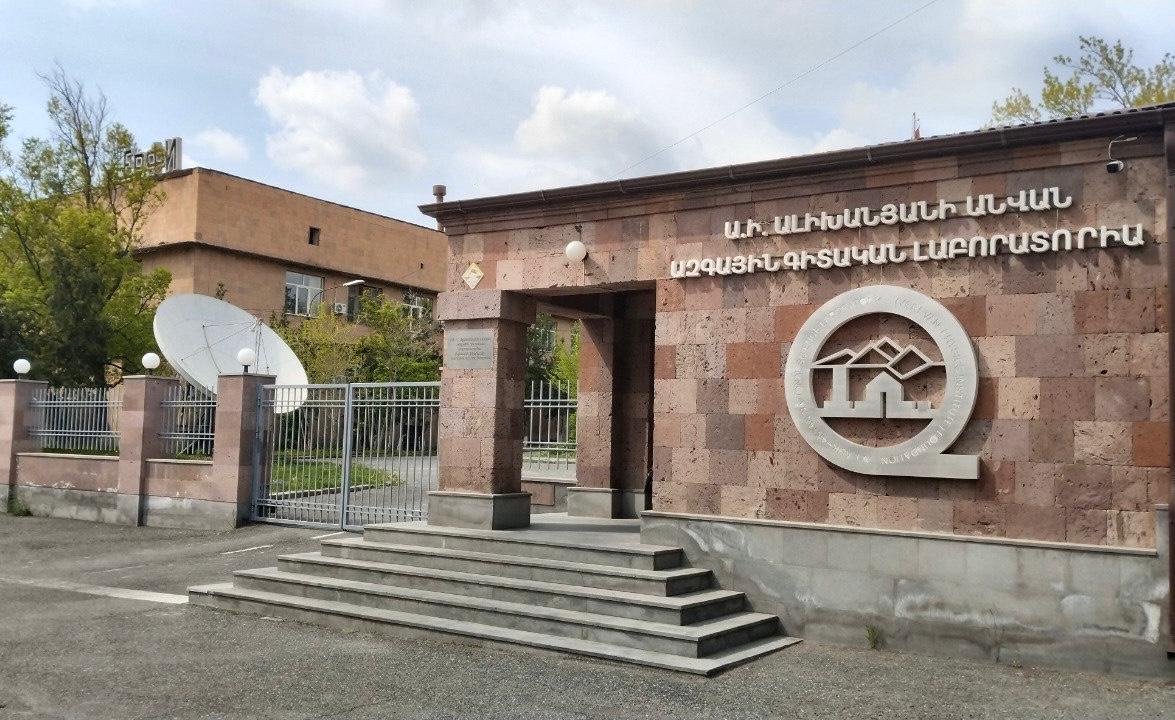
It was reorganized as a foundation under the name «A. I. Alikhanyan National Science Laboratory (Yerevan Physics Institute)» Foundation.


Granting of National Laboratory Status
By a decision of the Government of the Republic of Armenia, the institution was renamed the «A. Alikhanyan National Science Laboratory».

Reorganization and Continuation of Scientific Activities
Following the dissolution of the Soviet Union, the Institute came under the jurisdiction of the Republic of Armenia and continued its activities as Armenia’s leading center for high-energy physics.
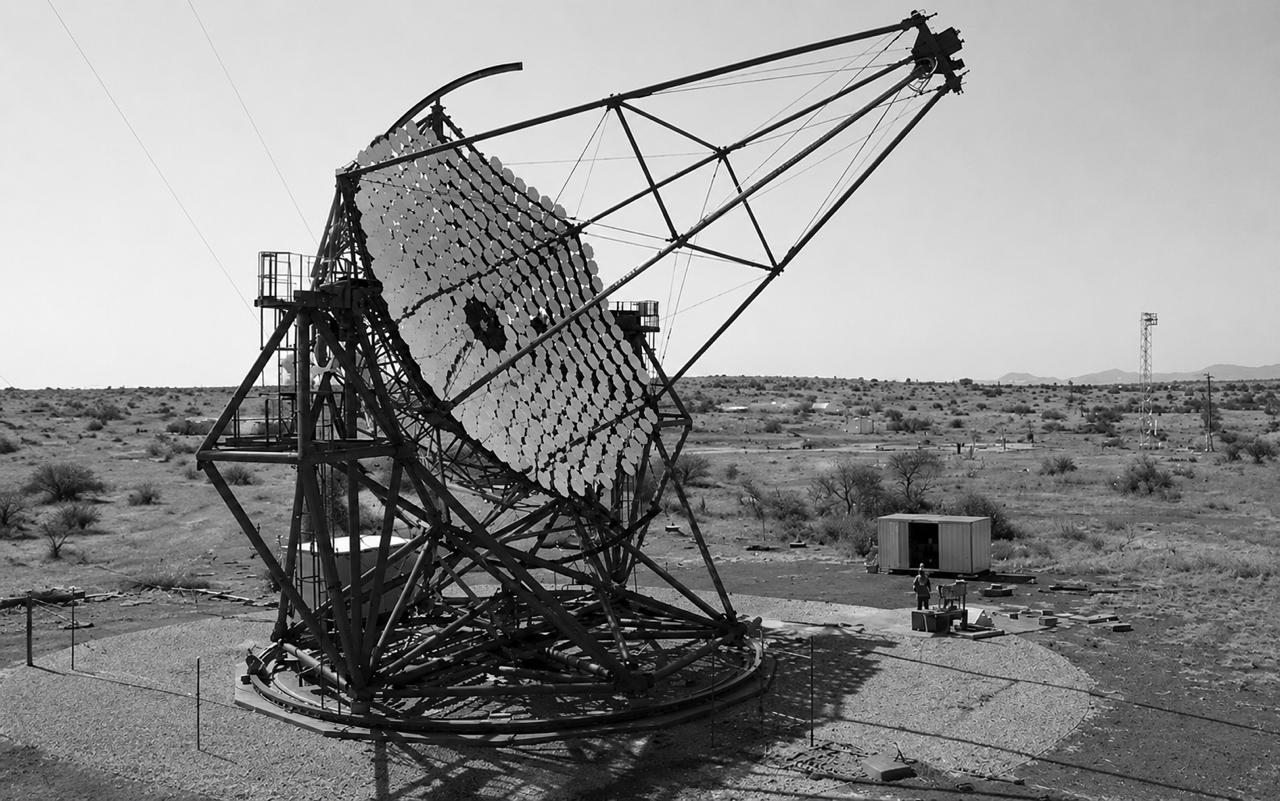
A New Approach to Very-High-Energy Gamma-Ray Astrophysics
The concept of Imaging Atmospheric Cherenkov Telescopes (IACT) for very-high-energy gamma-ray astrophysics was developed, successfully applied in the international HEGRA system, and later implemented in the MAGIC and H.E.S.S. experiments.
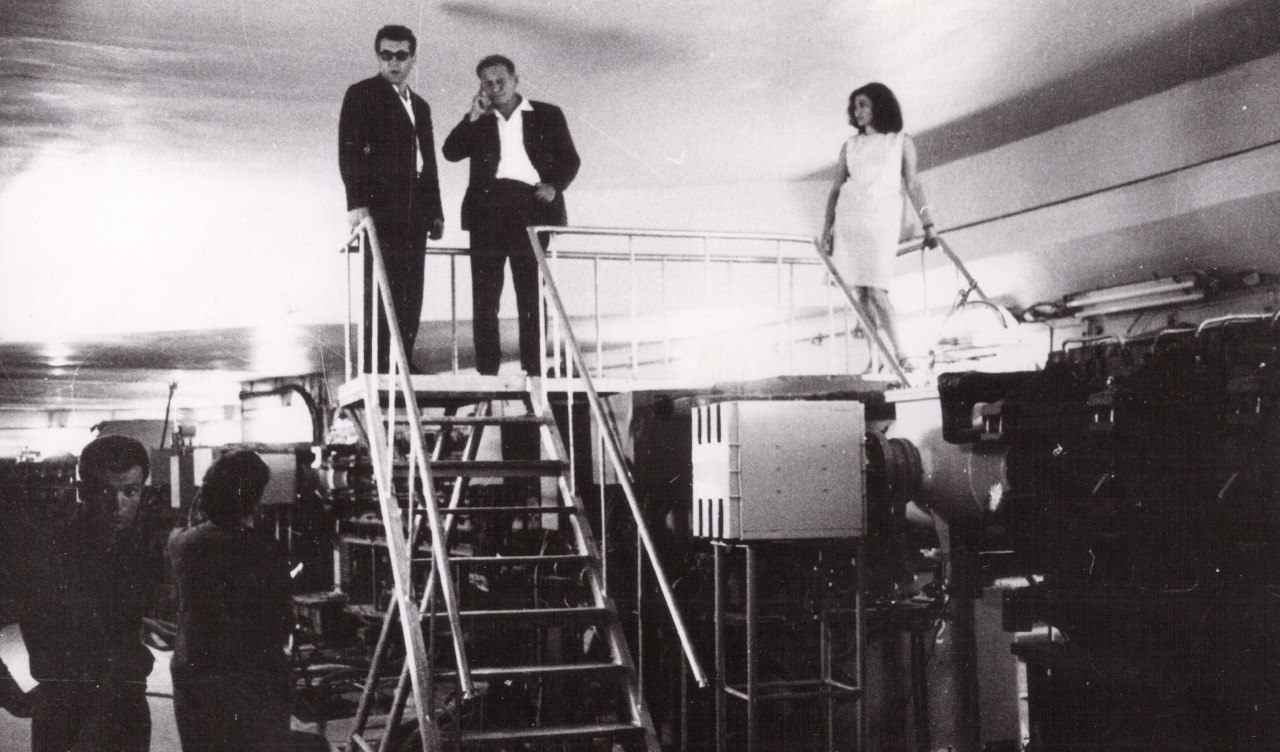
Experiments Conducted at the “ARUS” Accelerator
Fundamental experiments were carried out at the accelerator to study the hadronic properties of photons, the structure of nucleon resonances, and the properties of nuclear matter.
In 1970, X-ray transition radiation was discovered at the Yerevan accelerator, and it continues to be widely used for particle identification to this day.
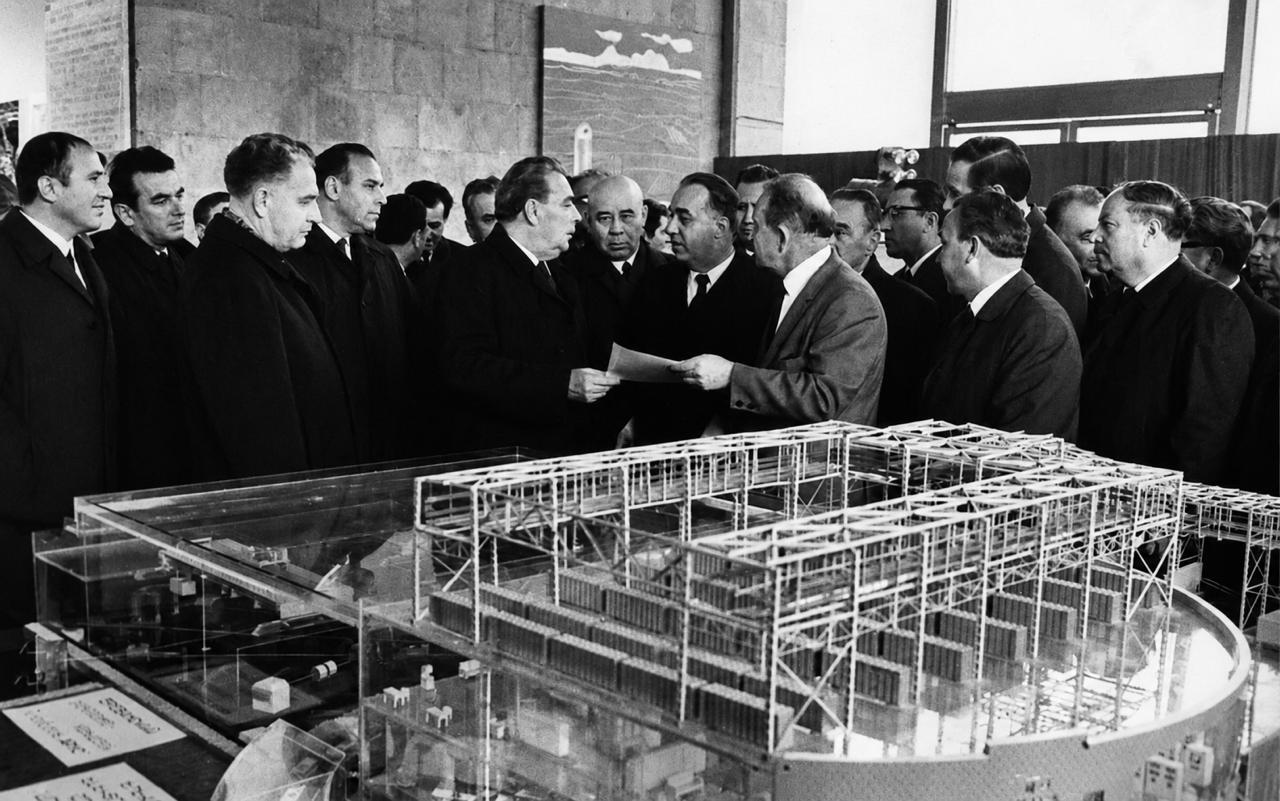
Construction of the “ARUS” Accelerator
The construction of the 6 GeV electron synchrotron, Armenia’s first particle accelerator, «ARUS», was completed.
This became one of the most important scientific milestones in the history of the Institute.
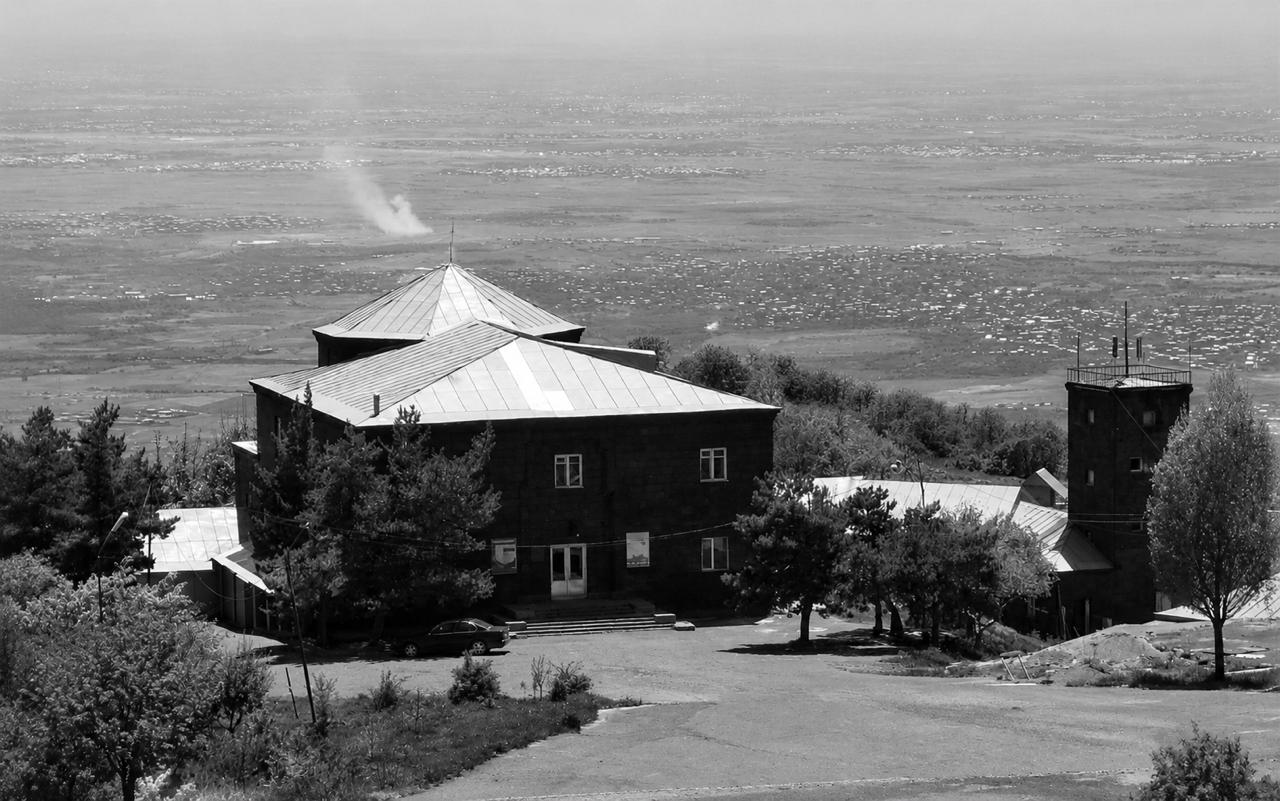
Establishment of High-Altitude Cosmic Ray Stations
High-altitude cosmic ray research stations were established on Mount Aragats: Aragats (3,200 m) and Nor Amberd (2,000 m).
They became the main experimental research base for cosmic ray physics.

Establishment
The Yerevan Physics Institute was founded in 1942 by renowned physicists Abraham Alikhanov and Artem Alikhanyan as the Institute of Physics of Yerevan State University.
In 1943, the Institute obtained the status of an independent scientific institution and became part of the Academy of Sciences of the Armenian SSR.
Directorate
The Directorate of the A. Alikhanyan National Science Laboratory (Yerevan Physics Institute) Foundation is responsible for the day-to-day management of the Foundation and ensures its smooth operation.
The primary objective of the Directorate is to ensure the effective implementation of the strategic plan and coordinate scientific and organizational activities to support the Foundation’s sustainable development.

Gevorg Karyan
Director
Arthur Hakobyan
Deputy Director for Scientific Affairs
Erik Khastyan
Scientific Secretary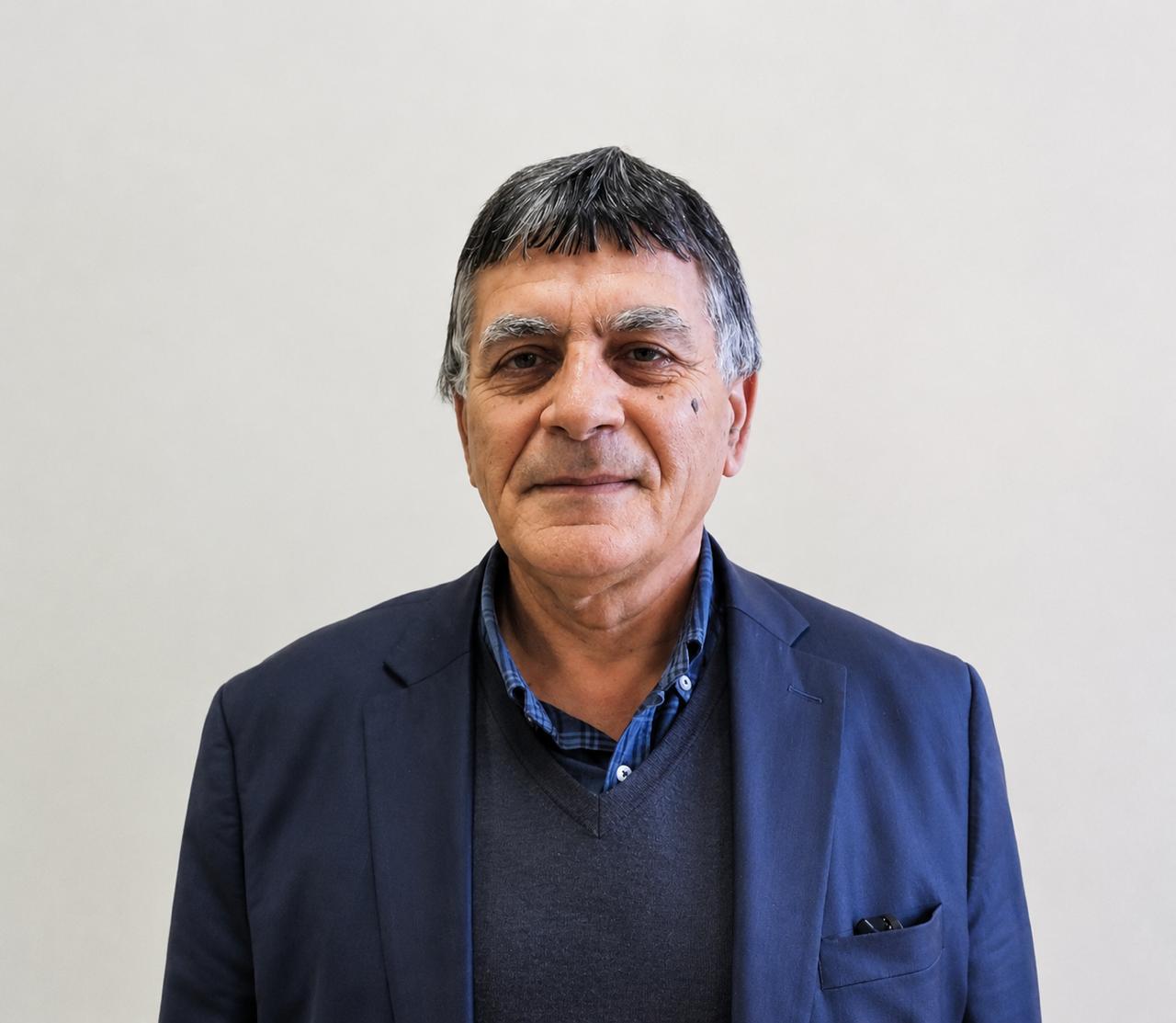
Vardan Avagyan
Advisor to the Director on Production and Economic Affairsin numbers
№1
The leading regional organization in high-energy particle physics and nuclear research.
8
Scientific Divisions
50+
Domestic and International Partnerships
100+ Annually
Researchers participating in international research visits, business trips, and professional training programs.

 2 Alikhanyan Brothers Street, Yerevan