


History
Historical Overview
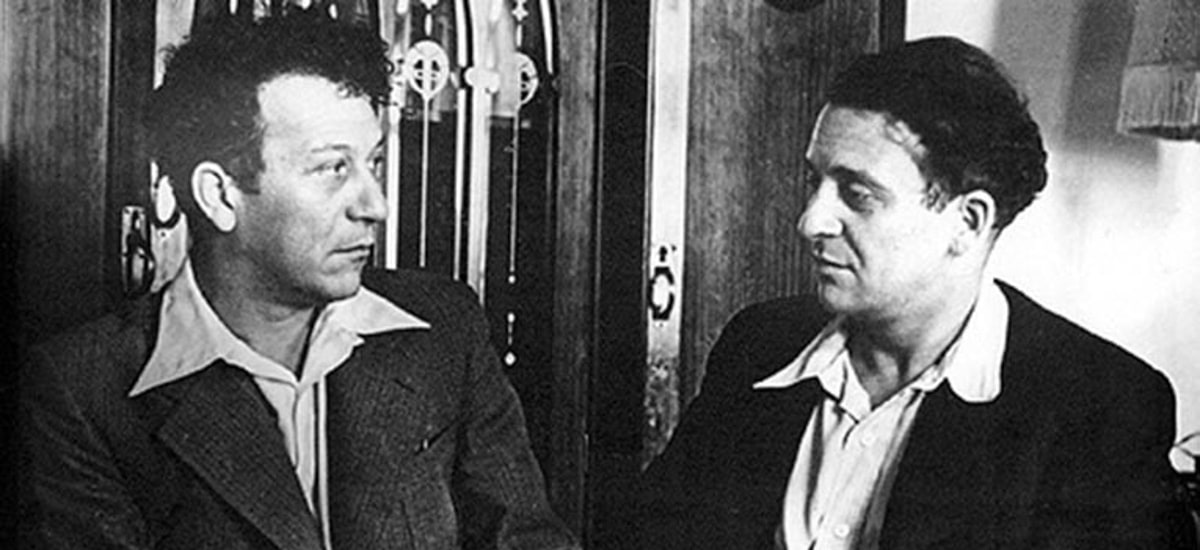
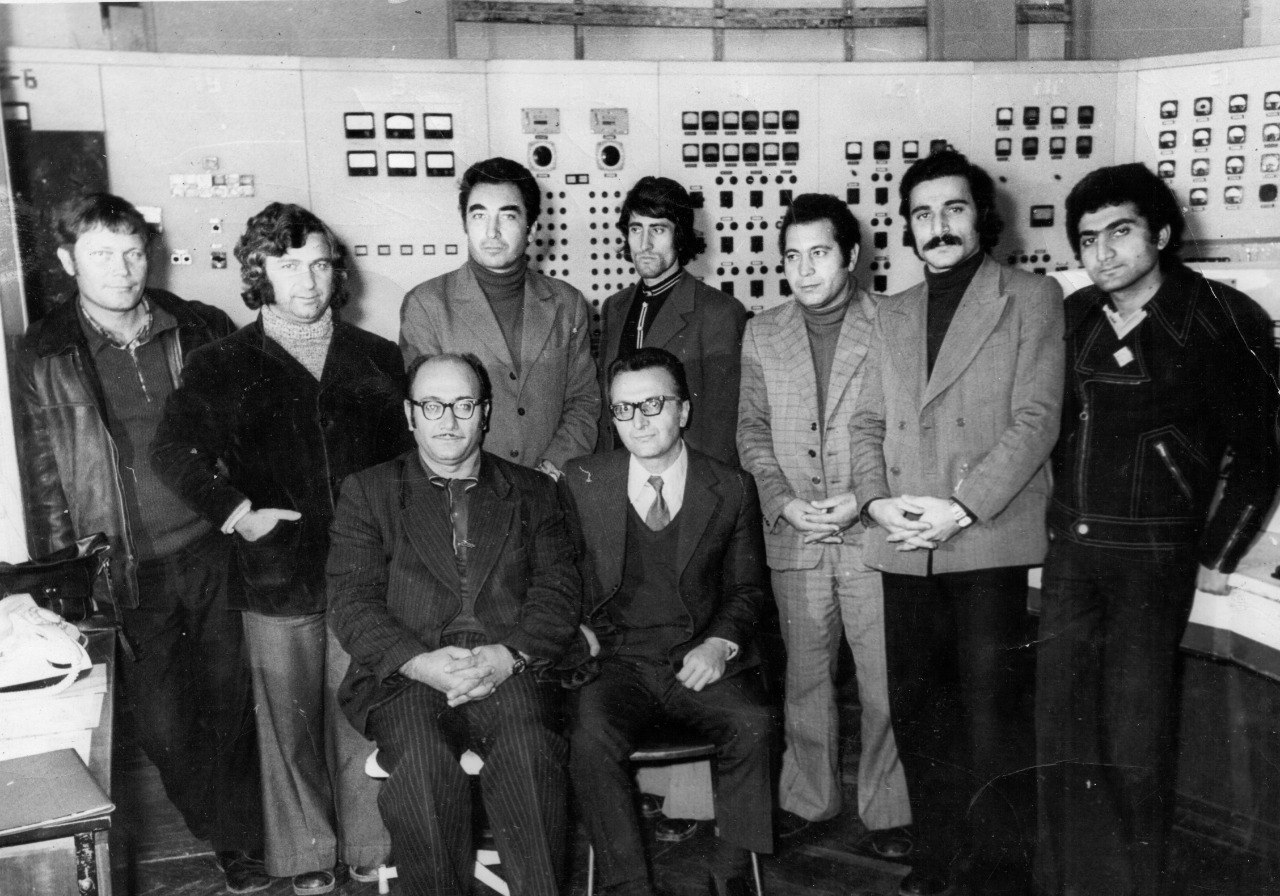
The Yerevan Physics Institute (YerPhI) was founded in 1943 by the renowned physicist brothers Abraham and Artem Alikhanyan. The origins of the Institute are rooted in the study of cosmic rays and the establishment of two cosmic ray research stations on Mount Aragats for this purpose: “Aragats” (3200 m) and “Nor Amberd” (2000 m). In 1962, the Institute came under the jurisdiction of the State Committee for Atomic Energy of the Soviet Union.

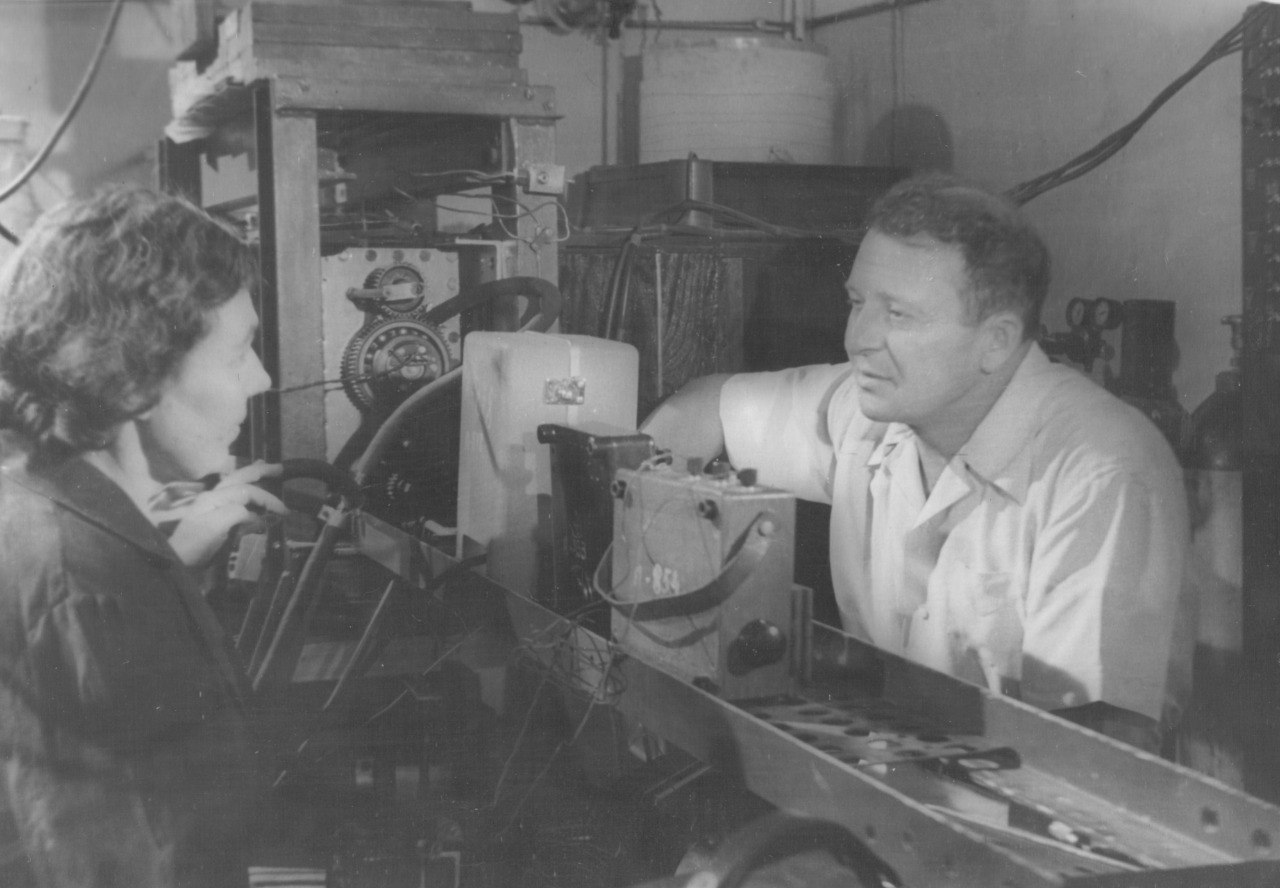
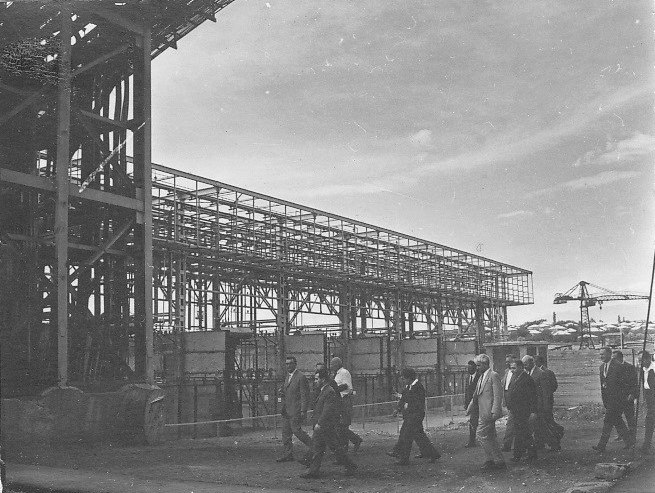
One of the major milestones in the Institute’s history was the construction of a 6 GeV electron synchrotron, completed in 1967, which became the first particle accelerator in Armenia (“ARUS”). Between 1970 and 1991, numerous experiments were conducted at the Yerevan electron accelerator, including studies of the hadronic properties of photons, the structure of nucleon resonances, the structure and properties of nuclear matter, and important characteristics of transition and channeling radiation. A particularly significant achievement was the discovery of transition radiation in the X-ray region at the Yerevan electron accelerator in 1970, a phenomenon that is still widely used in modern particle identification techniques.
As a result of these achievements, since 1985 the Institute’s researchers have been actively involved in major international scientific collaborations. One of YerPhI’s traditional areas of expertise has been the development of novel particle detectors. The large spark chambers and transition radiation detectors developed at the Institute are notable examples of successful experimental instrumentation. Another important contribution was the concept of Imaging Atmospheric Cherenkov Telescopes (IACTs), developed in the mid-1980s for very-high-energy gamma-ray astrophysics. This concept was successfully implemented within the HEGRA international collaboration and later adopted by the MAGIC and H.E.S.S. experiments.

Following the collapse of the Soviet Union, in 1992 the Yerevan Physics Institute was transferred to the jurisdiction of the Ministry of Industry and Trade of the Republic of Armenia. In 2002, the Institute was named after its founding director and continued its activities as the “A. I. Alikhanyan Yerevan Physics Institute” State Non-Commercial Organization. On June 17, 2010, by a decision of the Government of the Republic of Armenia, it was renamed the “A. Alikhanyan National Science Laboratory,” and in 2011 it was reorganized into the “A. I. Alikhanyan National Science Laboratory (Yerevan Physics Institute)” Foundation (AANL).
In recent years, AANL scientists have actively participated in medium- and high-energy particle physics experiments conducted at leading international research centers, including KEK, JLab, DESY, CERN-LHC, MAX IV, and MAMI. Research activities encompass the structure of nucleons and mesons, electromagnetic form factors of nucleons, quark-hadron duality, short-range nucleon-nucleon interactions, quark hadronization in nuclear matter and vacuum, searches for physics beyond the Standard Model, Higgs boson physics, quark-gluon plasma, nuclear and hypernuclear fragmentation, and other contemporary topics. In parallel, the Laboratory is engaged in the design and construction of experimental equipment, as well as in data acquisition and analysis using modern software tools.
AANL has long been and continues to be one of the leading scientific institutions in theoretical physics, conducting internationally competitive research in B-meson physics, Quantum Chromodynamics (QCD) and related fields, neutrino physics, quantum field theory, string/M-theory, integrable models, statistical physics, astrophysics and cosmology, condensed matter physics, and quantum information science.
In recent years, A. I. Alikhanyan National Science Laboratory has significantly strengthened its position as one of Armenia’s leading scientific institutions. It publishes a substantial share of the country’s scientific output in high-impact international journals. According to international scientometric assessments, a large proportion of citations to Armenian scientific publications are associated with research conducted at AANL, reflecting the Laboratory’s strong scientific impact and international recognition.
 2 Alikhanyan Brothers Street, Yerevan