




A presentation of two important works translated into Armenian by Ashot Grigoryan, Candidate of Physical and Mathematical Sciences and lecturer in philosophy and quantum mechanics, was held at the A. I. Alikhanyan National Science Laboratory (AANL). The books present the ideas of two of the founders of quantum theory, Werner Heisenberg and Niels Bohr, and provide Armenian readers with an opportunity to explore the historical and philosophical foundations of the development of quantum theory.
During the event and the lecture that followed, Grigoryan spoke about the choice of the books, their contemporary relevance, and the historical and philosophical significance of quantum theory.
According to him, the choice of authors was determined by their fundamental role in the creation of quantum theory:
“If two founders of quantum theory are to be named, they are Bohr and Heisenberg.”

 The translator noted that Heisenberg’s “The Physical Principles of the Quantum Theory” is of particular importance, as it is one of the earliest textbooks on quantum theory and reflects an attempt by one of the theory’s founders to present and teach it. In his assessment, the work is also important for reconsidering contemporary approaches to the teaching of quantum theory.
Niels Bohr’s “Atomic Theory and the Description of Nature,” on the other hand, is a collection of essays that approaches quantum theory primarily from epistemological and philosophical perspectives. According to Grigoryan, the book provides an opportunity to rediscover and reassess aspects of quantum theory that have gradually been pushed into the background over time.
The choice of AANL as the venue for the presentation was also symbolic. The translator noted that the Laboratory is significant not only as a scientific institution, but also as a place that carries a rich scientific heritage. The institutional tradition of physics inherited from the Soviet period, together with its complex historical trajectory, is particularly visible here. This, in turn, provides an opportunity to reflect on our understanding of quantum theory within the historical and cultural context shaped by that legacy.
The presentation was followed by a lecture entitled “A Century Later and Three Thousand Kilometers Away: Quantum Physics from Copenhagen to Yerevan,” devoted to the journey of quantum theory from Copenhagen to Armenia. The lecture explored how the theory developed within the scientific environment centered around Niels Bohr, spread to scientific centers around the world, was transformed in the intense ideological climate of the Second World War and the Cold War, and eventually reached present-day Armenia through Stalin-era and later Soviet scientific policies.
Grigoryan noted that during this journey, one of the important components of quantum theory—its epistemological discussions—was gradually devalued and pushed into the background, while mathematical formalism was preserved and came to play the dominant role. According to him, in order to reconsider the understanding of quantum theory that has become familiar to us, it is necessary to study the course of these transformations, which reveal, in their specific historical context, the foundations and motivations that shaped our perceptions.
 Referring to the intended readership of the books, the translator noted that they are not intended exclusively for physicists. Although Heisenberg’s textbook requires a certain level of professional background, a substantial part of Bohr’s essays is accessible to a broader audience. At the same time, he emphasized that these works do not belong to the genre of popular science; rather, they present ideas in physics that are important both for specialists and for representatives of other fields.
Speaking about the translation process, Grigoryan noted that for him it had primarily been a source of research discoveries. As one specific example, he drew attention to the fact that Bohr and Heisenberg often used different terminology when discussing the same phenomena. This reflects differences in their scientific and philosophical approaches and makes it possible to identify, at the linguistic level, the distinctive features of their divergent views.
Grigoryan is currently continuing work on a new book, noting that translating important scientific works is one of the best ways to engage with worldviews formed in different historical periods and cultural contexts and to relate them to the Armenian intellectual and cultural environment.


November
AANL to Participate in the “Science × Business” Conference
Septmber
AANL Participated in the “European Researchers’ Night in Armenia” Science Festival
Septmber
AANL Participated in the “BanUGorts․ YSU Expo-2026” Exhibition
July
An Amateur Chess Tournament Was Held at AANL
July
Presentation of the Armenian Translations of Works by Werner Heisenberg and Niels Bohr Held at AANL
June
International Children’s Day
May
AANL’s Participation in the International Exhibition “Global Education EXPO 2026”
February
AANL Participation in the “Successful R&I in Europe 2026” European Networking Event
December - April
Seminar at AANL Dedicated to Ruben Mkrtchyan’s 70th Anniversary
December - June
Year-End Summary Event at AANL

AANL to Participate in the “Science × Business” Conference
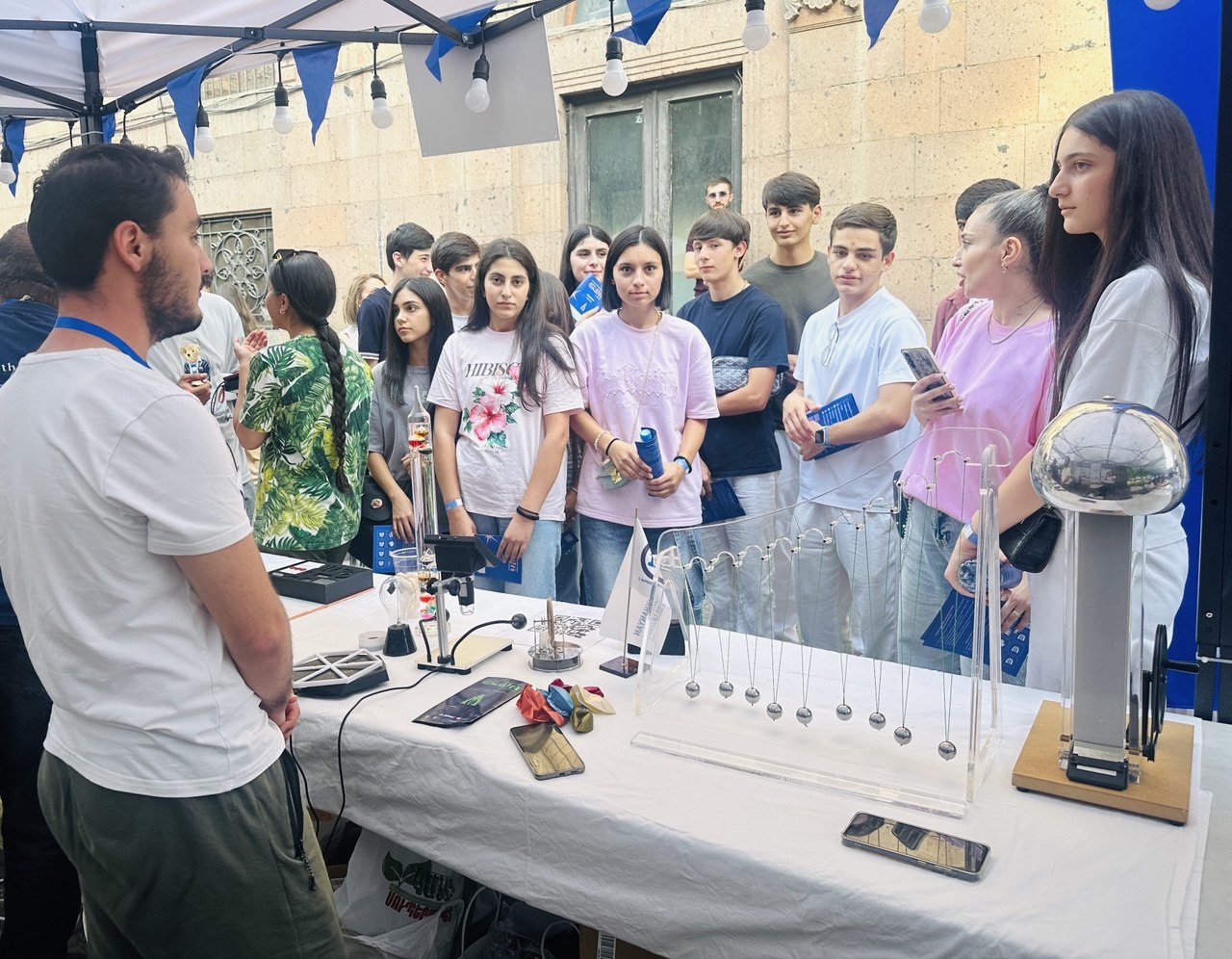
AANL Participated in the “European Researchers’ Night in Armenia” Science Festival

AANL Participated in the “BanUGorts․ YSU Expo-2026” Exhibition
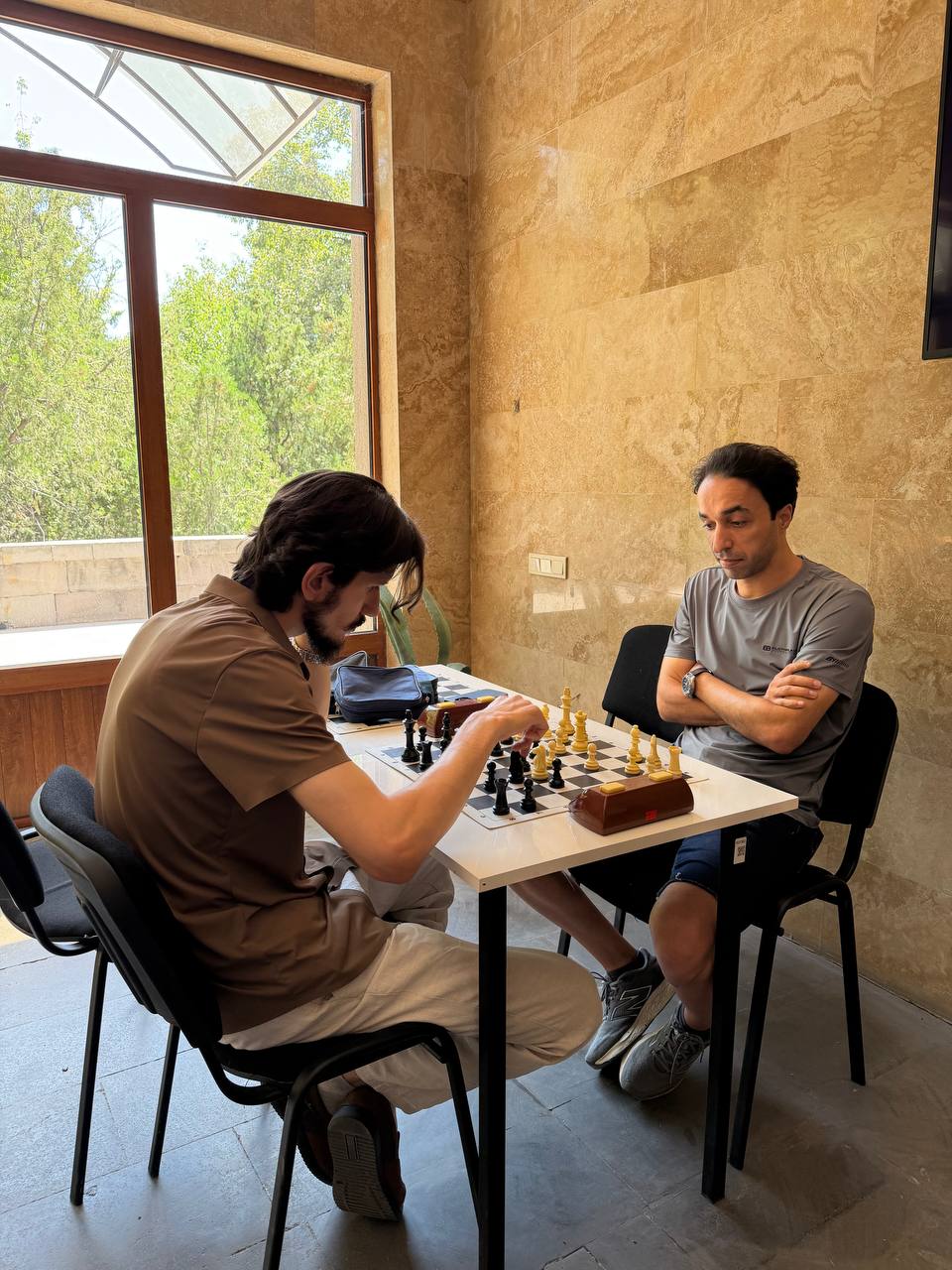
An Amateur Chess Tournament Was Held at AANL

International Children’s Day
.jpg)
AANL’s Participation in the International Exhibition “Global Education EXPO 2026”
.jpg)
AANL Participation in the “Successful R&I in Europe 2026” European Networking Event

Seminar at AANL Dedicated to Ruben Mkrtchyan’s 70th Anniversary

Year-End Summary Event at AANL

 Events
 2 Alikhanyan Brothers Street, Yerevan


